




Father Oscar Ferland served as a Roman Catholic priest in the Diocese of Providence for nearly five decades. He is named on the Diocese’s official list of credibly accused clergy, and his conduct is documented in the Rhode Island Attorney General’s comprehensive report on child sexual abuse released on March 4, 2026. If you were abused by Father Ferland, or by any priest who served in the same parishes where he worked, you are not alone, and what happened to you was not your fault. Rhode Island law now gives you a real opportunity to pursue justice.
Table of Contents
- Who Was Father Oscar Ferland and Where Did He Serve?
- What the Rhode Island Attorney General’s Report Says About Father Ferland
- The Institutional Response: What the Diocese Knew and When
- Rhode Island’s New Child Sexual Abuse Law (H-7200A/S-2616A) and What It Means for Ferland Survivors
- Your Legal Rights as a Survivor of Father Ferland’s Abuse
- FAQs About Father Oscar Ferland and Rhode Island Clergy Abuse Claims
Who Was Father Oscar Ferland and Where Did He Serve?
Father Oscar Ferland was born on March 16, 1918, and ordained on December 23, 1944. He served as a Roman Catholic priest in the Diocese of Providence until his retirement on June 1, 1991, and died on July 8, 1998. His ministry spanned nearly five decades and took him across Rhode Island, giving him sustained access to children in multiple communities.
According to the Rhode Island Attorney General’s Credibly Accused Clergy report, Ferland’s documented assignment history includes St. Patrick Church in Harrisville from 1945 to 1953, St. Brendan Church in Riverside from 1953 to 1956, St. Michael Church in Providence from 1956 to 1967, Christ the King Church in Kingston from 1967 to 1972, the University of Rhode Island in Kingston from 1968 to 1972, and St. Luke Church in Barrington from 1972 to 1991. He served at St. Luke’s Church in Barrington for nearly 20 years. He also provided part-time help at St. Joseph’s in Hope Valley, St. Bernard’s in Wickford, and St. Aidan’s in Cumberland.
That breadth of assignment matters. Survivors who attended any of these parishes or schools, or who had contact with Ferland in any of these communities, may have a viable legal claim. The Diocese of Providence covers all five counties in Rhode Island, and Ferland’s reach extended across several of them throughout his career.
Understanding where a priest served is a critical first step for survivors who are trying to piece together their own experiences. If you attended a parish where Ferland worked, even briefly, and you experienced abuse, speaking with a qualified sexual assault attorney can help you understand what your options are under Rhode Island law today.
What the Rhode Island Attorney General’s Report Says About Father Ferland
Father Ferland is included in the March 4, 2026, Rhode Island Attorney General’s Report, with accusations of sexually abusing little girls and a boy, with incidents occurring between 1964 and 1991. That span covers nearly three decades, crossing multiple parish assignments and reaching children of different ages in different communities.
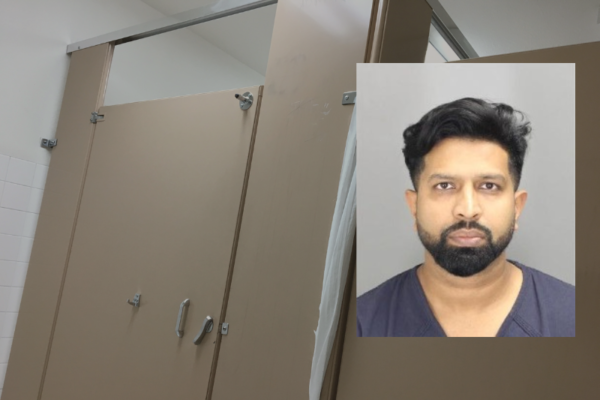
The allegations documented in the Attorney General’s report are deeply disturbing. In 2002, the Diocese received a report that in 1994, Ferland watched a 10-year-old girl use the toilet at St. Joseph’s in Hope Valley. He allegedly opened the stall door and stared at her. Ferland was substituting at the parish for a priest who was on vacation.
In 2006, a woman told the Diocese that Ferland inappropriately touched her and other girls in the early 1990s. At the time, the girl’s father confronted Ferland, who did not deny his behavior and said, “now I think I’m going to retire.” The man also said he informed Father McManus, later Auxiliary Bishop, of Ferland’s behavior, and McManus did not respond.
One alleged victim told the Diocese in 2007 that when she was age 10 in the 1980s and attending St. Luke’s School in Barrington, Ferland touched her vagina in a swimming pool, among many similar incidents, and that he would pick up her and other girls and touch their buttocks and thighs.
In 2017, a woman reported that she was sexually assaulted by Ferland on multiple occasions at St. Luke School when she was 13 years old in 1983 and 1984. She said she reported the abuse to the school principal, who told her she was a liar and threatened to expel her from school.
In 2018, a man told the Diocese that when he was age 8 or 9 and a student at St. Michael’s in Providence, Ferland sexually abused him, including rape. He said he had disclosed the abuse to Providence Police in 2006. The Attorney General’s report also documents that after reportedly raping an eight- or nine-year-old boy, Ferland told him that the sexual abuse was the “right thing to do” to get closer to God, and later told him not to tell anyone because it would affect his relationship with God. These manipulation tactics are a recognized pattern of grooming behavior, used to silence children and prevent disclosure.
The Institutional Response: What the Diocese Knew and When
The allegations against Father Ferland did not emerge in a vacuum. The pattern of institutional response documented in the Attorney General’s report raises serious questions about what church leaders knew, when they knew it, and what they chose to do about it.
When a father confronted Ferland directly about touching his daughter and other girls, Ferland did not deny the conduct. The man said he informed Father McManus, later Auxiliary Bishop, of Ferland’s behavior, and McManus did not respond. The man said he spoke again with McManus about Ferland’s behavior when McManus became bishop, after Ferland had died. That kind of non-response, at the supervisory level, is exactly what the 2026 Rhode Island child sexual abuse law was designed to address.
The enactment of the new law came after the release of a report in March by Attorney General Peter F. Neronha accusing the Catholic Diocese of Providence of a “well-worn pattern” of failing to remove dozens of priests accused of child sexual abuse and keeping the abuse secret over decades. The report identified 75 clergy members who sexually abused more than 300 children since 1950.
Ferland’s case fits that pattern precisely. Allegations were reported to diocesan officials. At least one senior church leader was told directly. Yet Ferland remained in ministry until his voluntary retirement in 1991. For survivors, the question of institutional accountability is not just moral. Under Rhode Island law, it is now a legal one. A sexual abuse lawyer can help you evaluate whether the Diocese or other supervisory entities may share legal responsibility for what happened to you.
Rhode Island’s New Child Sexual Abuse Law (H-7200A/S-2616A) and What It Means for Ferland Survivors
Rhode Island took a historic step for survivors on June 11, 2026. Governor Dan McKee signed legislation amending the statute of limitations for child victim claims of sexual abuse and creating a two-year window for victims to bring otherwise time-barred claims against institutions and supervisors accused of enabling or covering up sexual abuse. The new law took effect on July 1, 2026.
The legislation (2026-H 7200A, 2026-S 2616A) was sponsored by House Judiciary Committee Chairwoman Carol Hagan McEntee and Senator Mark McKenney. It directly responds to a gap that left many survivors without legal recourse. In 2023, the Rhode Island Supreme Court ruled that the 2019 law only applied to suits against individual perpetrators, not the institutions or supervisors who enabled them. The 2026 law closes that gap.
The new law establishes a two-year civil revival window that opens from July 1, 2026, to June 30, 2028. During this 24-month period, survivors can file civil suits even if the statute of limitations on their claims had previously expired. That means survivors who believed their time had passed now have a concrete window to act.
For survivors of Father Ferland specifically, this law matters enormously. Ferland died in 1998. Many of his victims were children in the 1960s, 1970s, and 1980s. Under prior law, their claims against the Diocese and other institutional defendants were likely time-barred. The law amends the statute of limitations for claims of sexual abuse of a child and creates a two-year window for victims to bring otherwise time-barred claims against institutions and supervisors accused of enabling or covering up sexual abuse. This is the opportunity survivors have been waiting for.
All time-barred claims must be filed by June 30, 2028, or they may be forever barred. Do not wait. The window is open now, but it will close.
Your Legal Rights as a Survivor of Father Ferland’s Abuse
You have legal rights, regardless of how long ago the abuse occurred. Rhode Island law recognizes that survivors of childhood sexual abuse often need years, or even decades, to come forward. Shame, fear, and the psychological impact of trauma are real barriers. The law accounts for them.
Under the 2026 law, claims can be brought against institutions and supervisors who are accused of enabling or covering up sexual abuse, not just against the individual abuser. Father Ferland is deceased, but the Diocese of Providence and other entities that may have received reports of his conduct, failed to act, or enabled his access to children remain potential defendants in civil litigation.
Civil claims are separate from criminal prosecution. You do not need a criminal conviction, a police report, or any prior legal action to pursue a civil lawsuit. Many survivors of clergy abuse have never spoken to law enforcement. That does not disqualify you from seeking justice in civil court.
Rhode Island also allows survivors to file lawsuits using pseudonyms in certain circumstances, a protection that can be important for those who value their privacy. If you are concerned about public exposure, this is something you can discuss directly with an attorney.
The attorneys at Sommers Schwartz represent survivors of sexual assault and abuse across multiple states, including Rhode Island. They understand the courage it takes to come forward. If you or someone you love was abused by Father Ferland, or by another priest who served in the same parishes, reaching out to a qualified sexual assault lawyer is a meaningful first step toward understanding your options. There is no obligation, no judgment, and no pressure. You deserve to know where you stand.
FAQs About Father Oscar Ferland and Rhode Island Clergy Abuse Claims
Father Ferland died in 1998. Can I still file a civil lawsuit?
Yes. The fact that Father Ferland is deceased does not automatically prevent you from filing a civil claim. Under Rhode Island’s new law (H-7200A/S-2616A), which took effect on July 1, 2026, survivors can bring time-barred claims against institutions and supervisors accused of enabling or covering up abuse. The Diocese of Providence and other entities that may have had knowledge of Ferland’s conduct are potential defendants in civil litigation, even though Ferland himself is no longer living. An attorney can evaluate the specific facts of your situation and advise you on who may be held accountable.
What is the deadline to file a claim under Rhode Island’s new lookback window?
The two-year revival window created by H-7200A/S-2616A runs from July 1, 2026, through June 30, 2028. If your claim was previously time-barred, meaning the old statute of limitations had already expired, you must file before June 30, 2028, or you may permanently lose your right to sue. Because building a civil case takes time, you should speak with an attorney as soon as possible rather than waiting until the deadline approaches.
What if I reported the abuse to the school or the church and nothing was done?
That experience is unfortunately common among survivors of clergy abuse in Rhode Island, and it is directly relevant to your legal claim. The 2026 law specifically creates a pathway to hold institutions and supervisors accountable when they are accused of enabling or covering up sexual abuse. If you told a school principal, a parish administrator, or a church official about what happened and they dismissed you or took no action, that response, or lack of one, may be part of what makes an institutional defendant liable. Document everything you remember, and share those details with an attorney.
Do I have to file a police report before I can pursue a civil lawsuit?
No. A civil lawsuit is entirely separate from a criminal case. You do not need a police report, a prior criminal investigation, or a conviction to pursue a civil claim. Many survivors of clergy abuse never reported to law enforcement, for reasons that are completely understandable. Rhode Island civil courts allow you to bring a claim based on your own account of what happened, supported by whatever evidence is available. A civil attorney can help you understand what evidence may be useful and how to build your case.
How do I know if Sommers Schwartz can help me?
Sommers Schwartz represents survivors of sexual assault and abuse in Rhode Island and across multiple states. If you were abused by Father Ferland, or by another priest who served in the Diocese of Providence, or if you were abused in any institutional setting where someone in authority failed to protect you, the firm wants to hear from you. You can reach out for a confidential, no-obligation conversation. The attorneys will listen, answer your questions honestly, and help you understand whether you have a viable claim under Rhode Island law. What happened to you was not your fault, and you deserve to have someone in your corner.
More Resources About Clergy Abuse
- Diocese of Providence Clergy Abuse
- Father John Abruzzese
- Father Raymond Allard
- Father Argencourt
- Father Azzarone
- Father Barnes
- Father Battel
- Father Belhumeur
- Father Bordignon
- Father Dennis Brodeur
- Father Campbell
- Father Carpentier
- Father Cavanaugh
- Father Charland
- Father Corbesero
- Father Crafton
- Father D’Angelo
- Father DeAngelis
- Father Louis Demers
- Father Albert Desrosiers
- Father Paul Desrosiers
- Father Diogo
- Father Dolan
- Father Doran
- Father Dunn
- Father Dziob
- Father Edes
- Father Feeney
- Father Ferry
- Father Fitzgerald
- Father Flanagan
- Father Gagnon
- Father Gillooly
- Father Gorton
- Father Guertin
- Father Holden
- Father James Jackson
- Father Edward Kelley
- Father Lacasse
- Father LaMountain
- Father Leboeuf
- Father Paul Henry Leech
- Father Lepire
- Father Lonardo
- Father Philip Magaldi
- Father Manu
- Father Normand Marcantonio
- Father Joseph McCra
- Father McIntyre
- Father Meehan
- Father Meglio
- Father Menard
- Father Micarelli
- Father O’Connell
- Father J.F. O’Neil
- Father W. O’Neill
- Father Powers
- Father Rafferty
- Father Raiche
- Father Reynolds
- Father Rocha
- Father Sadowski
- Father Santagata
- Father Francis Santilli
- Father John Scagnelli
- Father Smyth
- Father Tanguay
- Father Tedeschi
- Father Tormey
- Father Tousignant
- Father Turillo
- Father Ventre
We fight hard. And we win.
News & Case Alerts
Read related articles and learn about recently filed cases.
Our attorneys have been featured on local and national media outlets, including:

Recommending Matt Turner
I highly recommend this law firm! Matt Turner was amazing to work with. He fought hard for our family and genuinely cared about us every step of the way. He was knowledgeable, compassionate, and always kept us informed throughout the process. We are incredibly grateful for everything he did and…
Tad Roumayah Is One of the Good Ones
I had a wonderful experience working with Tad. He was knowledgeable, responsive, and professional throughout the entire process, while also being genuinely kind and supportive. I always felt that my concerns were taken seriously and that I had someone wise and resilient in my corner. I’m very grateful for his…
From One of Tad Roumayah’s Clients
Attorney Tad Roumayah did a FANTASTIC job with my case. I highly recommend him!!!
A Client’s Praise for Dina Zalewski
My experience with Dina Zalewski and the Sommers Schwartz team was nothing short of incredible. The way that they showed genuine concern throughout this ordeal made me feel increasingly confident. I highly recommend Dina and her team for any of your legal pursuits.
Working with Tad Roumayah
I can’t say enough good things about working with Tad Roumayah. From our very first conversation, he was attentive, straightforward, and genuinely invested in getting the best outcome for my case. He took the time to explain everything clearly, answered my questions (even the ones I asked more than once)…
Praise for Alexis Amy and Tad Roumayah
I am very happy with the settlement Sommers Schwartz obtained for me in my age and disability discrimination case.Tad Roumayah and Alexis Amy explained every step of the process and answered all my questions along the way.I highly recommend this law firm!
I Cannot Say Enough Good Things About This Law Firm and My Attorney, Matthew G. Curtis.
I cannot say enough good things about this law firm and my attorney, Matthew G. Curtis. From the very beginning, their professionalism, communication, and attention to detail stood out immediately. They kept me informed throughout the entire process, answered my questions promptly, and always made me feel like a priority…
From a Wayne State Medical School Student About Judy Susskind
Law & Medicine was truly one of my favorite rotations – seeing a trial and learning from you was a privilege. Medical students are so lucky to have such an incredible preceptor for this experience. Your firm, colleagues, and clients are lucky to have you. (From a Wayne State University…
Our Clients Say It Best